

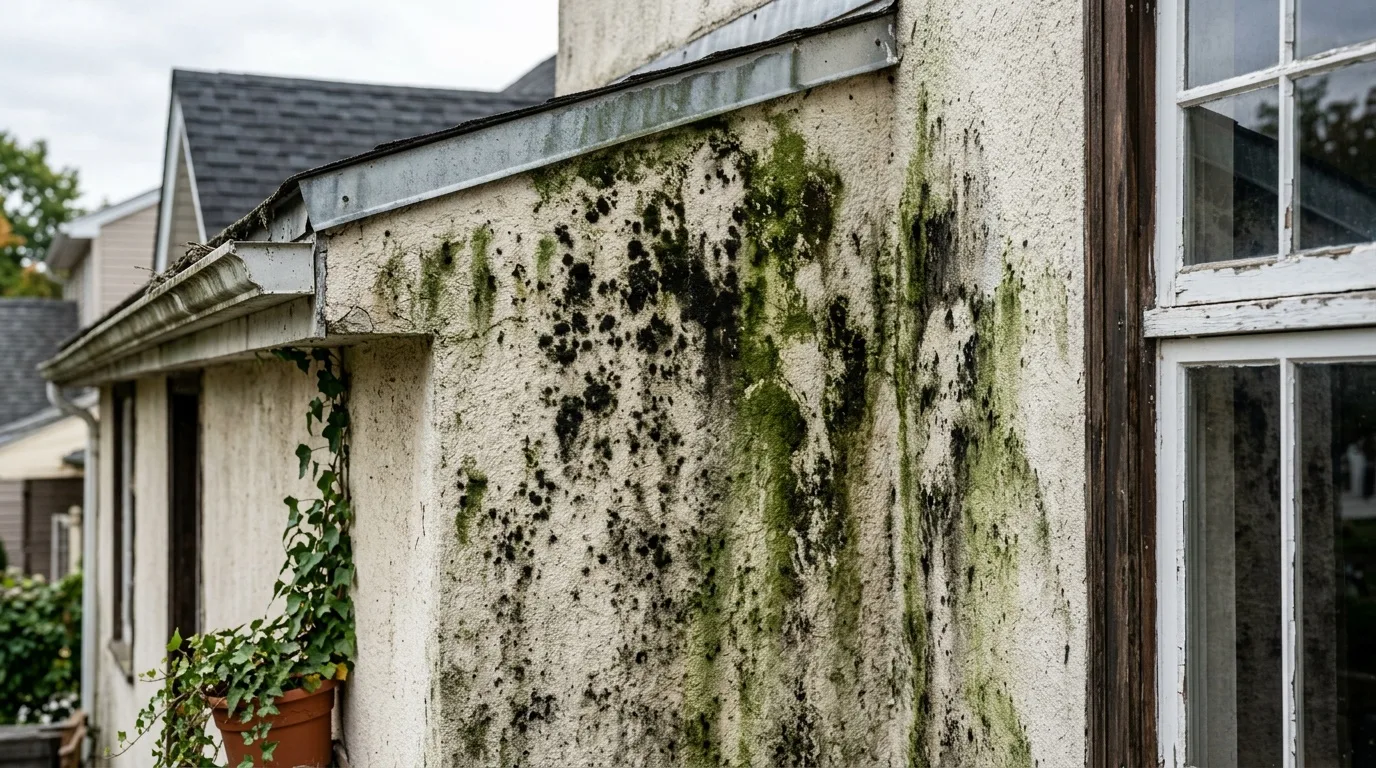
Mold on stucco is a serious problem for a homeowner. Repair of the exterior should not be put off, and that includes thorough treatment with antifungal products. Otherwise it becomes very hard to stop the growth.
The exterior of any building protects the main walls from the weather and also gives the whole house a decent look. Finishing an exterior is a complicated process that takes certain skills, so the final coat is best left to pros. And if you decide to do the work yourself, study all the details first.
Mold growing on exterior walls is a coating you can see with the naked eye, black, white, blue or green. In practice it can appear on any surface: concrete, stone, brick and even paint. Besides mold, rot spots show up on the outside of a house, especially on wood surfaces.
What the Stains on Stucco Are
Mold on stucco exterior walls spoils the look of the whole house. Fungal spores multiply fast and "take over" larger and larger areas. Late repairs and good conditions for growth lead to large damaged areas. Up close, mold looks like something similar to a cobweb.
Black mold on stucco is not the only kind. Mildew, algae and mold usually appear on the walls of homes. Most owners try not to notice darkened corners and green patches on the exterior. But this growth does a lot of harm and over time can damage the structure, so it needs to be dealt with right away.
Algae, mildew or water inside the wall
Mold is a fungus that likes a damp, warm environment. To grow it needs three main conditions: moisture, a suitable temperature and organic matter (for example, leftover building materials or dirt) that it can feed on. If even one of these conditions is missing, mold cannot develop.
- Green mold on stucco and algae. Green growth on walls points to a surface that stays damp, usually in shade and where dirt and leaves collect.
- Mildew on exterior walls. Darkened corners and dark patches that keep spreading are the coating most homeowners see first and try to ignore.
- Water inside the wall. Moisture that gets under damaged stucco feeds mold on the sheathing and framing underneath. This is no longer a cosmetic stain.
Why Coastal Stucco Turns Green or Black
Many homeowners believe fungus only appears on old houses. That is a mistake. The main cause of fungus on walls is dampness, along with a lack of sunlight. Mold can show up even on the walls of a new build. It is a harmful microorganism that multiplies fast and gets into every crack, damaging larger and larger areas, and in the end this ruins the walls.
The main reason it appears is high humidity and a temperature suitable for growth. The absence of gutters makes things worse. In that case even a short heavy rain can lead to mold. As a rule, the north side of a house is hit first, especially if the house is surrounded by a lot of greenery and stands in shade.
On the outside of a house, mold often appears when the wall is no longer sealed and moisture gets in through hairline cracks, poor waterproofing or a badly installed finish. The location of the building matters too: if a wall stays in shade for a long time, it has a harder time drying after rain or dew, and that makes ideal conditions for fungus. In La Jolla the same happens with walls that catch sprinkler spray and damp marine air day after day.
Main causes of mold on an exterior
- High moisture level. Water collects on the surface or in the structure of the walls, often because of groundwater close by or drainage problems.
- Poor ventilation. A lack of air movement leads to damp, cool air standing next to the wall.
- Mistakes in finishing work. The wrong choice of materials, the application method not followed, insulation done wrong.
- A bad location for the building. Shade from trees, houses built close together and no sunlight.
- Damage to the finish. Cracks, chips and broken sealing layers let moisture get inside.
Mistakes that lead to mold
Often mold has less to do with outside factors and more to do with how the construction was organized. These are the most common mistakes:
- Saving on materials and skipping waterproofing.
- Breaking the application method for stucco and insulation.
- Using paint without moisture protection.
- Drainage installed the wrong way.
- Dirt and mold on walls because nobody looks after them.
Is Mold on the Exterior Dangerous?
Outdoors, mold spores are everywhere, so a stain on the outside wall is mostly a sign of a wall that stays wet. The health concern starts when moisture and mold get inside the house.
It also harms the house. Mold settles on stone and concrete and especially on wood. Together with the fungi that cause wood rot, it can ruin the exterior of a building fairly quickly. Moisture that gets under damaged stucco helps mold grow on the sheathing and framing behind it. A neglected case can damage the exterior so badly that restoring it costs the owners a lot.
When Stains Mean Water Inside the Wall
Dampness in the house and on the exterior is often the result of mistakes in how the house was built. Mold has no plan to take over your home. But when humidity rises, mold multiplies, the damaged area gets bigger, it ruins your house and it affects your health.
Poor waterproofing also matters: dampness gets into cracks in the stucco and breaks it down. If stucco is crumbling, a stain keeps coming back in the same spot, or the finish has cracks around it, the moisture is no longer only on the surface. A wall like that needs a look from people who do water damage restoration on homes, and drying a wet wall takes time. How long depends on the materials, as described in our guide to drying out a house.
How to Remove Mold and Green Algae from Stucco
Special solutions are used to remove mold growth. Simply painting the exterior will not get rid of the fungus. It will come back.
If mold has already appeared, painting over it is not a solution. The fungus has to be removed first, the surface cleaned with a mold cleaner and the wall dried out.
To keep it from coming back, follow all the stages of repair in order:
- Wash the mold off first. Stucco is porous and soft, so use a garden hose or a low-pressure rinse and a soft brush instead of high-pressure blasting, which can cut into the finish and push water into the wall.
- Clean the surface of the wall. Remove the microorganisms from the surface carefully with a brush.
- Remove damaged material where you can. If possible, brush off loose, crumbling material; leave larger stucco repairs to a pro.
- Treat the surface with an antifungal solution and let it dry. Follow the product's label.
- If the stucco is cracked or crumbling, repair and recoating are a job for a plastering contractor.
For general safety steps during cleanup, read the EPA's advice on mold cleanup. If the growth has reached into the wall or the house, see how professional mold remediation is done.
Major exterior repair is a hassle and not cheap, and homeowners are not always ready to start protecting the walls the next day. Some need time to find good pros. So as not to lose time before the workers arrive, you can try to remove the main sources of mold yourself: move away from the walls anything that keeps them damp and let the walls air out. Later on, preventive repair of the damaged surface will be needed.
When mold has spread inside and rooms have to be cleared before work starts, belongings can be moved out with pack-out services for contents.
Protecting the Walls After Repair
When the work is finished, the repaired walls need protection: gutters, drip edges and a drainage system. Take care of the base of the wall too, and if needed waterproof it and give it a proper finish. Waterproofing walls with silicone-based products is also a good idea. It keeps moisture from getting into the materials and breaking them down.
Waterproofing is the first and one of the main ways to protect an exterior from moisture. It creates a barrier that water cannot get through. Modern polymer products are used for this, applied in an even coat on the walls. Pay attention to preparing the surface well before applying waterproofing: clean dirt and dust off the walls, fill cracks and chips. That makes the protective layer work better.
Mold cleaners made for exterior walls help keep fungus from coming back; follow the label. Many modern coatings repel water and at the same time let extra moisture evaporate, which keeps water from sitting on the surface.
Prevention: Simple Steps for Homeowners
Here is a list of simple but working tips that help avoid mold on the outside of a house:
- Good drainage around the house, so that water does not collect at the base of the walls.
- Finish materials with protection from UV light and moisture.
- A check of the finish after every season, with damage repaired in time.
- Dirt and leaves cleaned off the walls, so they do not become food for fungus. In coastal yards this also means aiming sprinklers away from the stucco.
It is also important to set up or improve ventilation around the building to lower humidity. In especially hard cases you may need a pro for a full treatment of the wall.
The fight against mold should start as early as possible, before serious harm is done to the house and the people in it. Remember that it is much easier to prevent fungus and mold on an exterior than to get rid of them.
To find out who would be working on your house, read more about our restoration team and what local homeowners have said. More articles on water, fire and mold are on the restoration news blog, and the full list of services is on the La Jolla restoration homepage.