

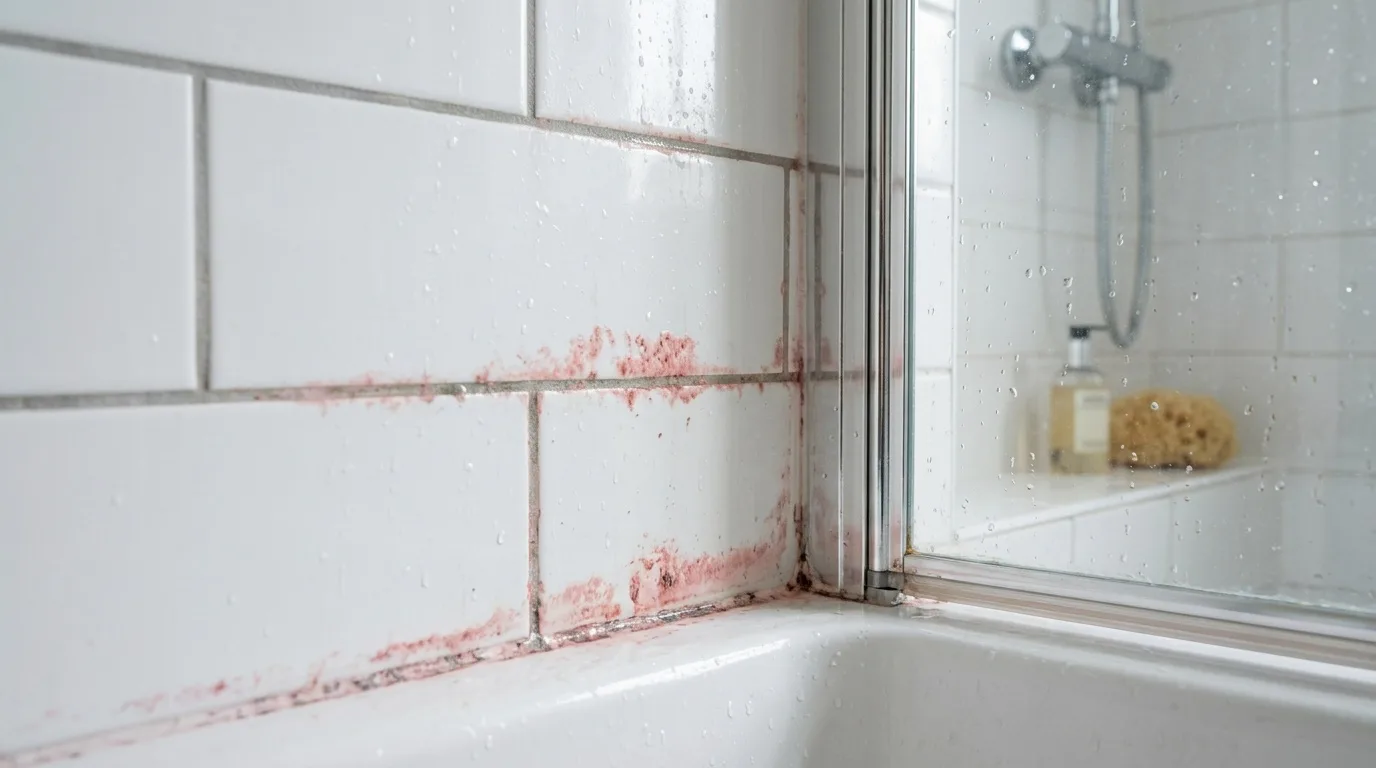
Have you noticed reddish or red-orange spots in the corner of the tub, under the toilet, on the shower curtain or around the sink drain? This is what people call pink mold in the shower, and it can grow into an unpleasant slimy film. Below we cover what pink mold is, why it shows up and how to deal with it.
The bathroom is one of the dampest places in the house, and high humidity and warmth, as is well known, make ideal conditions for all kinds of microorganisms. Most often what you find in a bathroom is mold. But sometimes it is bacteria that multiply on the surfaces. If you find pink slime on the walls, the tile, the shower curtain or around the drains, it should not be ignored. It does not only spoil the look of the bathroom, it can also be a potential health risk.
What Pink Mold in the Shower Usually Is
Pink mold is usually the bacterium Serratia marcescens. Black mold is a fungus, often Stachybotrys chartarum. The obvious difference in color is only the outward sign. Black mold is more dangerous: it can irritate the skin and cause allergic reactions and breathing problems. Pink mold is less dangerous, more unpleasant to look at and to touch, but people prone to allergies, people with respiratory diseases and asthma can still have health problems from it.
Serratia marcescens is a bacterium from the Enterobacteriaceae family that is often found in damp rooms. Warm, wet surroundings suit it. Fortunately, the bright pink or reddish tint makes the bacterium easy to spot. On the surface it can look like a fungal growth, which is why it is so often mistaken for mold.
Where Pink Mold Grows in the Bathroom
Serratia marcescens can appear on walls and in the joints between tiles, especially if they stay wet after a shower. It is also often seen on soap dishes and shampoo bottles, because it feeds on the fatty compounds contained in cosmetic products. Besides that, it multiplies in drains and on shower curtains, where moisture also lingers and conditions favor its growth.
Typical places to look:
- Tub and shower edges. Water drops stay along the rim of the bathtub and in the corners of the shower pan.
- Pink mold in the toilet. It forms a ring at the waterline inside the bowl and shows up around the base, where water collects.
- Pink mold on the shower curtain. The folds of the curtain hold drops of water that the bacterium needs.
- Drains. Moisture and soap scum sit in the drain openings of the tub, shower and sink.
- Soap dishes and bottles. Leftover soap and shampoo give it food.
What Causes Pink Mold in the Shower
The appearance and spread of pink mold in the bathroom is helped by:
- High humidity and condensation. This is exactly why Serratia marcescens usually shows up in bathrooms and avoids other rooms in the house. It needs water, and it picks the tub edges, the space under the toilet, the tile joints in the shower zone and the folds of the curtain. Water drops stay there, and pink mold needs them.
- Poor ventilation. The air in the bathroom stays humid for a long time, surfaces do not dry, and conditions are created for the bacterium to multiply.
- Buildup of organic matter. Soap foam, hair and body oil. This is what Serratia marcescens feeds on. If daily cleaning of the shower stall and tub is skipped, pink mold gets the chance to feed and multiply, covering larger and larger surfaces and turning into slime.
Is Pink Mold Dangerous?
For most people with a strong immune system, contact with Serratia marcescens is not a serious threat. However, if the bacterium gets into the body of a person in poor health, it can cause respiratory tract infections, especially in people with chronic lung disease. If it gets into the urinary system, urinary tract infections are possible. If it gets into wounds or scratches on the skin, it can cause a skin infection. It can also cause eye infections when it gets into the eyes. So in any case it is better to get rid of the pink film in the bathroom as soon as possible.
Serratia marcescens is especially dangerous in hospitals, where it can contaminate medical devices, catheters and soap dispensers. Its ability to form a biofilm makes it hard to fight: the bacterium attaches firmly to surfaces and can resist disinfectants. Fighting bacteria that form biofilms is still a serious problem for science today.
Before you start cleaning pink mold, put on a mask and gloves to protect your skin and airways. People with weak immunity, chronic lung disease, open cuts or scratches should be especially careful, since the bacterium can cause infections when it gets into wounds, eyes or airways.
For general background on how mold in the home affects health, see the CDC's page about mold and health.
How to Get Rid of Pink Mold
Fighting pink mold is easier than fighting black mold. It does not grow on dry painted walls and window sills, it does not eat into the walls, it stays on the surface. It washes off tile easily with vinegar, bleach, toilet cleaners and dish detergents - use one at a time and never mix bleach with vinegar or other cleaners, since that releases toxic gas. The only difficulty is that pink mold gets into hard-to-reach places. You will have to reach under the toilet and wash the pink slime out of the corners of the shower pan.
To remove Serratia marcescens you can use a solution of vinegar and water in equal parts:
- Spray it on. Apply the solution to the affected areas and leave it for 10–15 minutes.
- Scrub. Then wipe the surface thoroughly with a sponge or brush, paying special attention to the joints and hard-to-reach places.
- Rinse and dry. After that, rinse everything with water and wipe it dry to keep the humidity down.
A shower curtain with reddish spots is better washed whole, with laundry detergent, and with vinegar added to kill the bacterium.
This method removes the bacterium well, but if the film comes back, it is worth thinking about why it appears and taking the extra prevention steps described below.
How to Keep Pink Mold From Coming Back
In a well-ventilated bathroom without high humidity, pink mold is much less likely to appear. The main prevention is lowering humidity and regular cleaning.
- Ventilation. Good ventilation is one of the main ways to fight the bacterium. After a shower, open a window or turn on the exhaust fan to bring the humidity in the room down. Leave the bathroom door fully open after washing up.
- Run the fan long enough. Turn the exhaust fan on before or at the start of the shower and leave it running about 20–30 minutes after, or until the bathroom and the shower surfaces are completely dry. Ideally the fan should send the humid air outside. The shower door or curtain can also be left partly open to improve air circulation and speed up drying.
- Remove soap residue. As said above, the bacterium feeds on the fatty compounds in cosmetic products, so soap dishes, shampoo bottles and other surfaces where cosmetic residue can collect should be wiped regularly. Clear away soap foam and hair every day.
- Clean the drains. Moisture and soap scum often stay in the drains, making an ideal place for Serratia marcescens to multiply. Cleaning drains regularly helps keep the bacterium from returning.
- Towels, mats and washcloths. Hang wet towels, mats and washcloths so that air can move freely around them.
- Shower curtain. Wash the shower curtain regularly.
- A dripping shower head. If the shower head drips, have it repaired. Even a small constant leak can keep one spot wet all day long.
When Black Mold Shows Up Instead
And most importantly, do not forget: if the humidity in the bathroom stays high, over time not only Serratia marcescens bacteria can appear, but also fungi, including black mold, which is often considered the most dangerous.
Ordinary cleaning removes the visible traces of mold, but moisture or the fungus can stay inside porous grout or damaged wall materials. A constant leak will undo even the most thorough cleaning. Soap residue, skin oil and dust give mold extra food. And even surfaces that seem dry can hold moisture in the grout and nearby materials for several more hours.
To start, treat the affected areas with a suitable grout cleaner or mold remover, following the directions on the package. If some spots do not go away, they can be rubbed gently with a non-abrasive sponge or a grout brush. After that, rinse the shower thoroughly and let all surfaces dry completely. But removing the visible mold alone is unlikely to solve the problem if the source of constant moisture stays.
If mold keeps appearing in the same place, check for loose tiles, a slow drain, damaged seals and possible plumbing leaks. A constant musty smell, soft drywall, bubbling paint, stains outside the shower or mold coming back quickly after cleaning can point to a more serious hidden moisture problem. In that situation it is better to first find and fix the source of moisture with a qualified pro, for example through professional mold remediation in La Jolla, and only after that repaint the surface. When a leak has soaked the wall behind the shower, it is a job for water damage restoration and structural drying; how long that takes is covered in our guide on drying out a house after water damage. If the work means emptying the room first, there are pack-out services for your belongings.
To sum up, pink slime in the bathroom is not just a cosmetic flaw but a signal that the room has favorable conditions for Serratia marcescens to multiply. Serratia marcescens is not as dangerous as the fungus behind black mold, and for most people it is not a deadly threat, but it is unpleasant and can lead to health problems, so it is still better to get rid of it as fast as possible.
You can learn more about our restoration team, read what local homeowners say in reviews, browse more home moisture and mold articles, or go back to the La Jolla restoration company homepage.